
The Building of Symphony Hall
When Henry Lee Higginson established the Boston Symphony Orchestra in 1881, the orchestra first performed in the Boston Music Hall located on Hamilton Place across from the Boston Common. The congested location, ill-ventilated building, and constant threats of demolishment prompted Higginson to start looking for a new location. In 1892, he and three associates purchased a plot of land on the corner of Huntington Avenue and what was then called West Chester Park (now Massachusetts Avenue). He also recruited one of America's top architects, Charles Follen McKim, to design the building. In 1893, the state proposed a rapid transit line that would pass immediately through the Boston Music Hall, accelerating the need for a new location. The measure was eventually defeated by ballot, but plans for a new space continued.
The construction of the new hall began in June 1899 on concrete foundations under Otis W. Norcross. Once complete, Symphony Hall looked very much like the rendering sent by Langerfeldt (image on right) - a brick basilica with a portico and gabled front, without the ornamental details. The Herald described the interior as "...artistic and aesthetic [with] nothing obtrusive anywhere, nothing to draw one's attention away from the music." Not only was it elegant but also "dearly familiar" with characteristics of the Boston Music Hall (including the statue of Apollo Belvedere). The total cost at the building and land came to $771,000, over budget but still economical. Today Boston's Symphony Hall rates among the top three music halls in the world along with Amsterdam's Concertgebouw and the great hall of Vienna's Musikverein. Its acoustic success could not have been achieved without Wallace Sabine, who refused payment for his work.

Color photographic reproduction of an architectural rendering of the exterior of Symphony Hall building, corner of Massachusetts Avenue and Huntington Avenue ascribed to Theodore Langerfeldt, 1899
Planning a New Hall
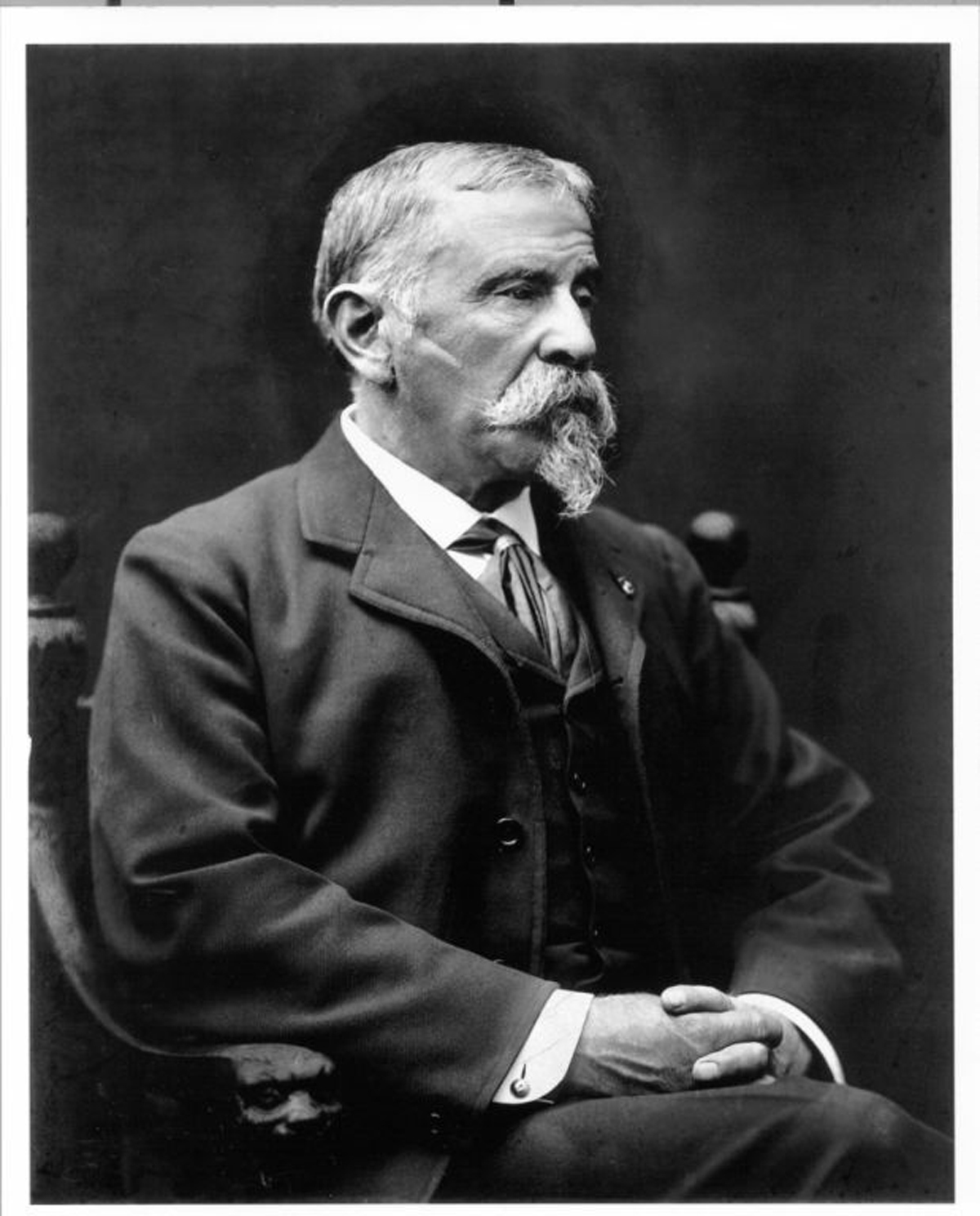
Henry Lee Higginson, founder of the BSO.
The building of Symphony Hall was spearheaded by Major Higginson as he sought to establish a permanent home for the orchestra he founded.
Photograph by James Notman.
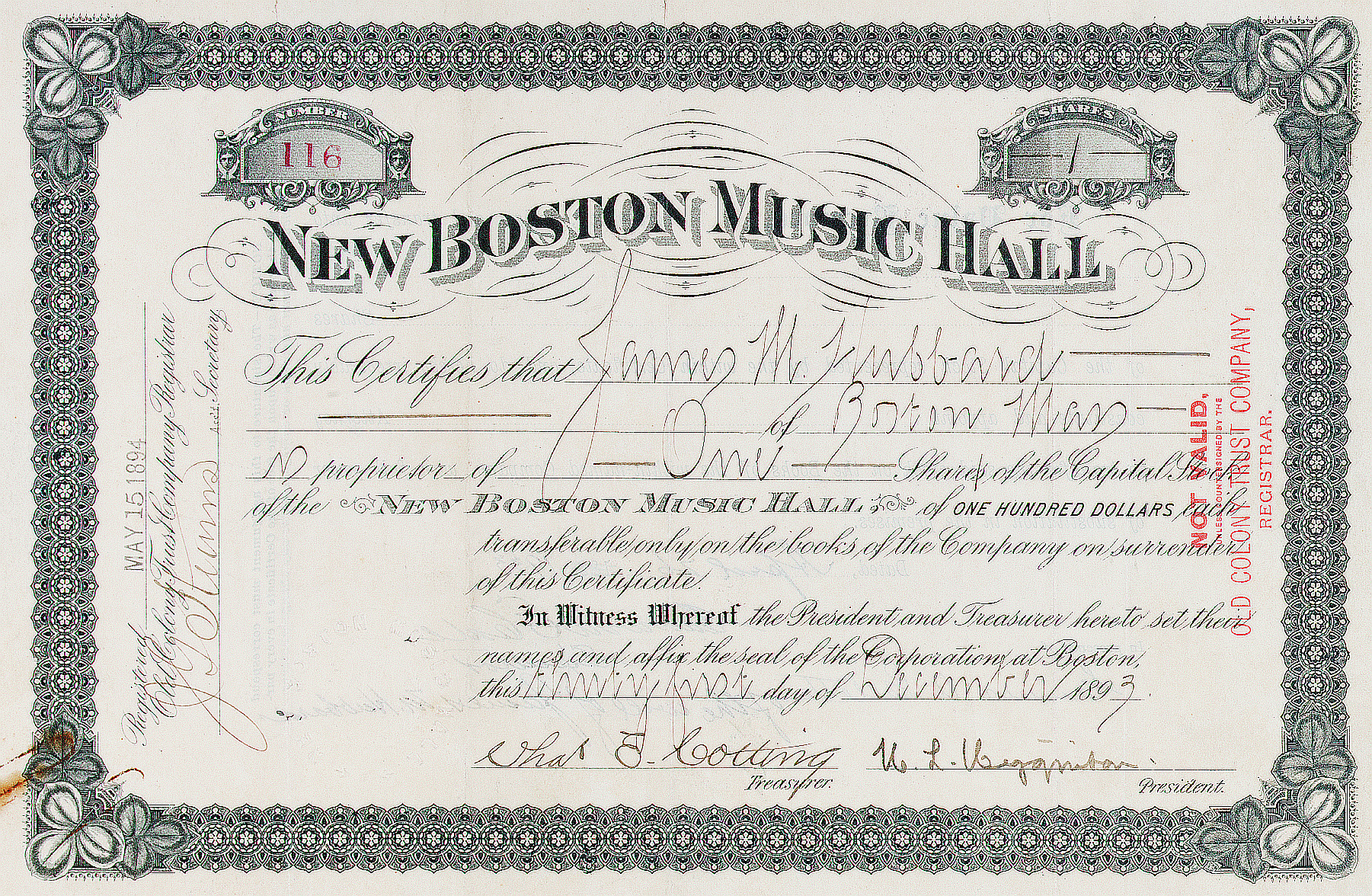
Share of Capital Stock of the New Boston Music Hall, issued December 21, 1893.
Henry Lee Higginson and some close associates purchased the plot of land that became the site of Symphony Hall in 1892. The following year stock shares were issued to fund the eventual construction of Symphony Hall.
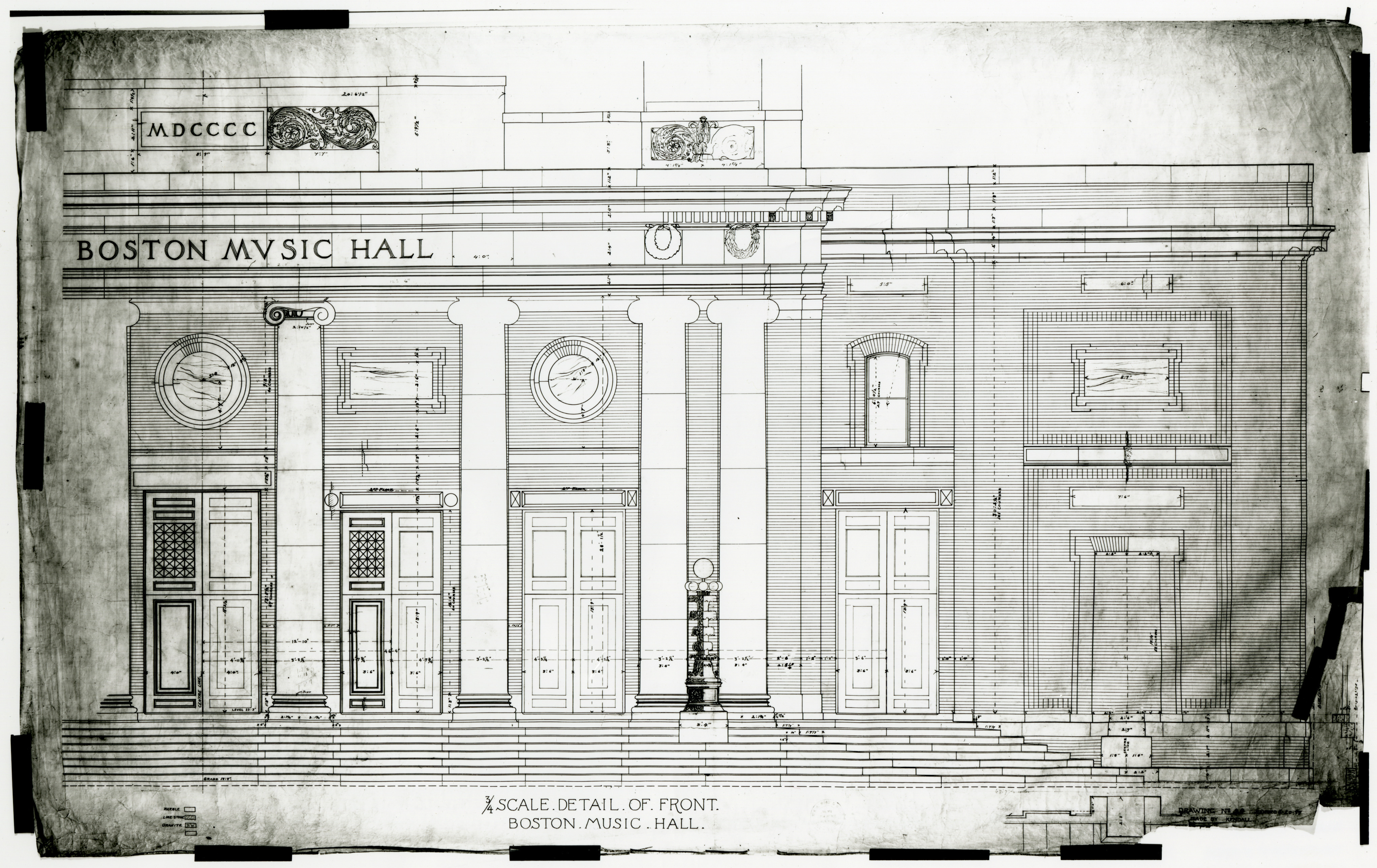
Architectural plan for the new Boston Music Hall by McKim, Mead, & White, scale detail of front.
Courtesy of The New York Historical Society
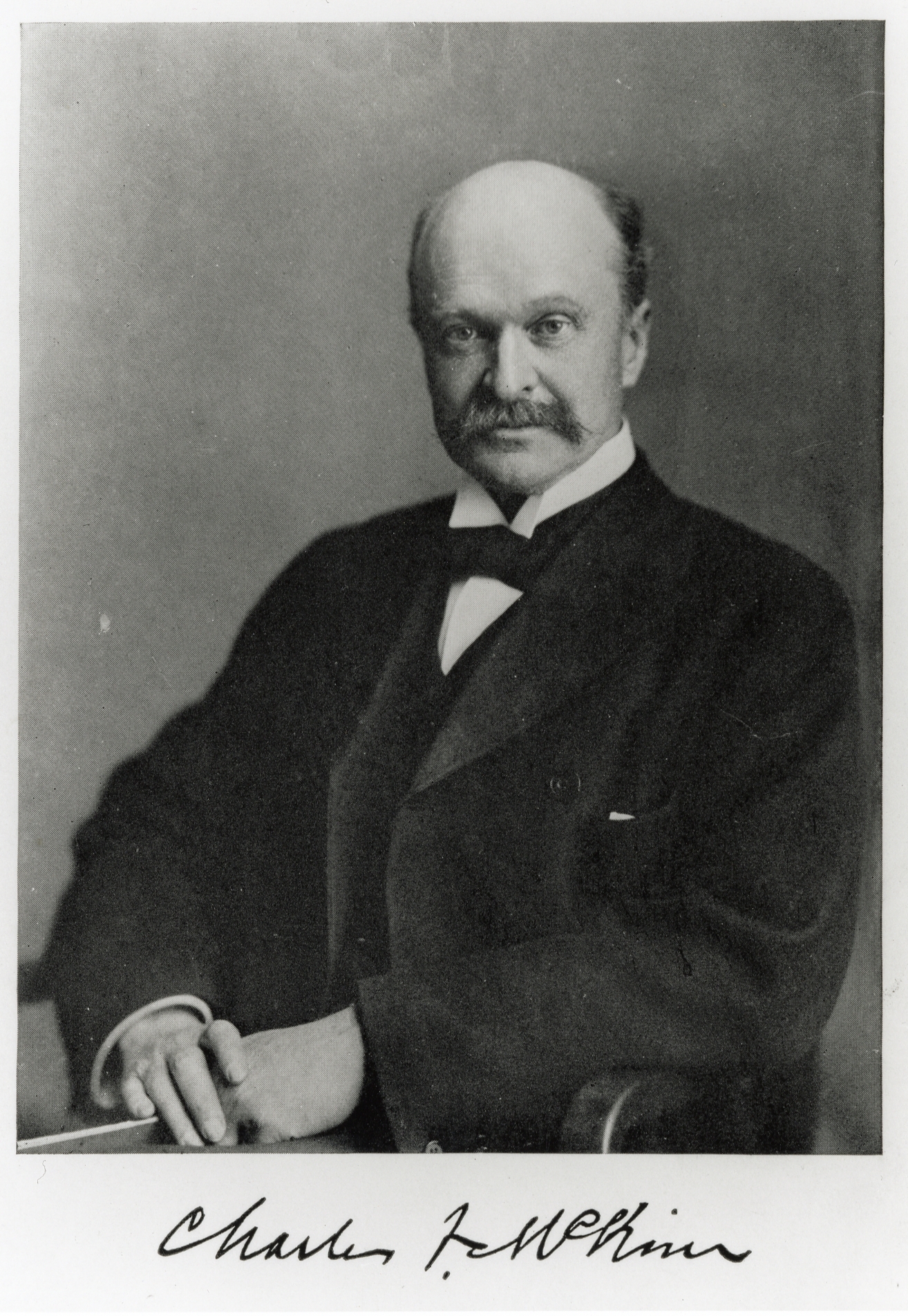
Charles Follen McKim (1847-1909).
Founder of the American architectural firm McKim, Mead & White, and lead architect for Symphony Hall.
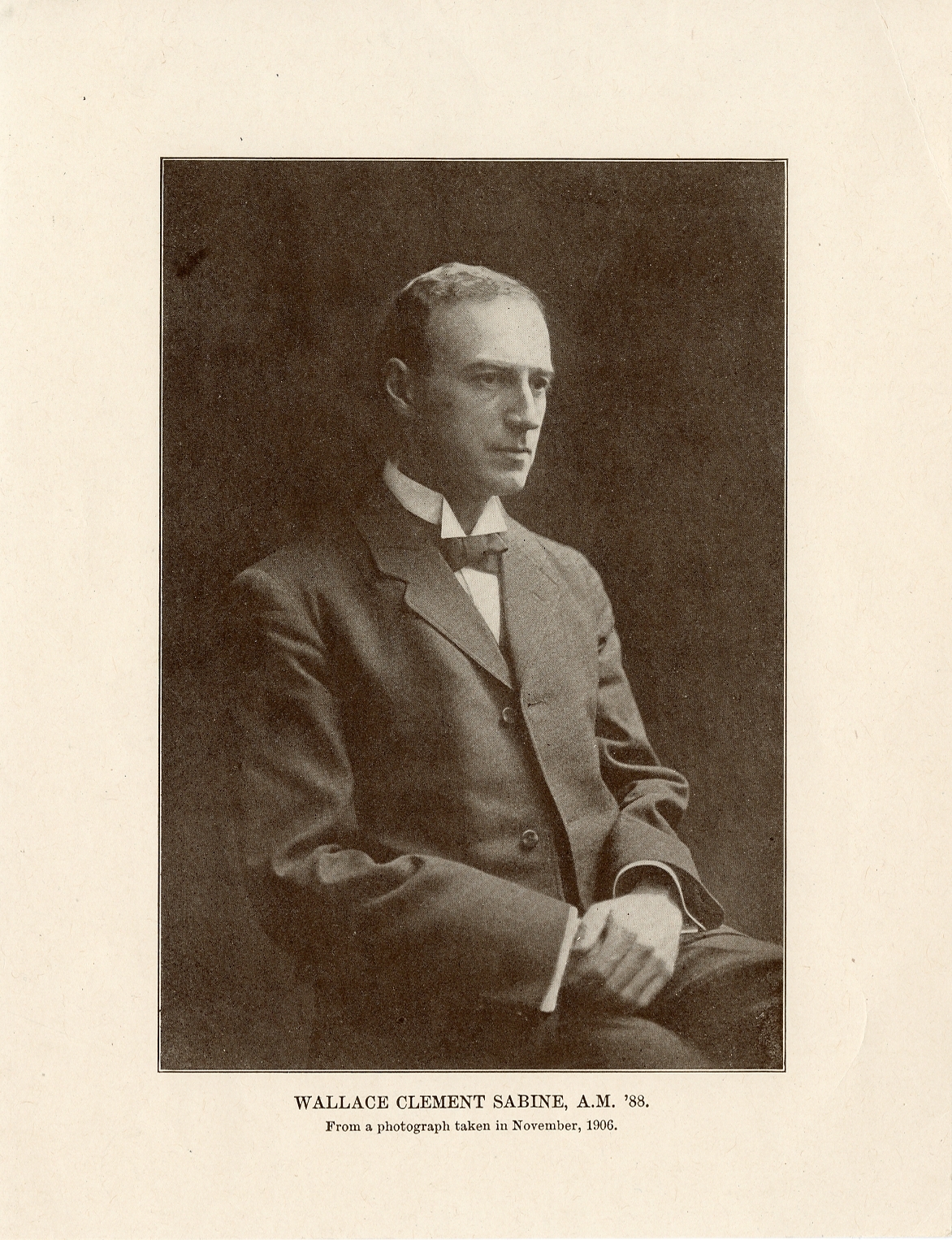
Wallace Clement Sabine (1868-1919).
The young Harvard physics professor served as consultant, making Symphony Hall the first auditorium in the world to be built according to the principles of acoustical science.
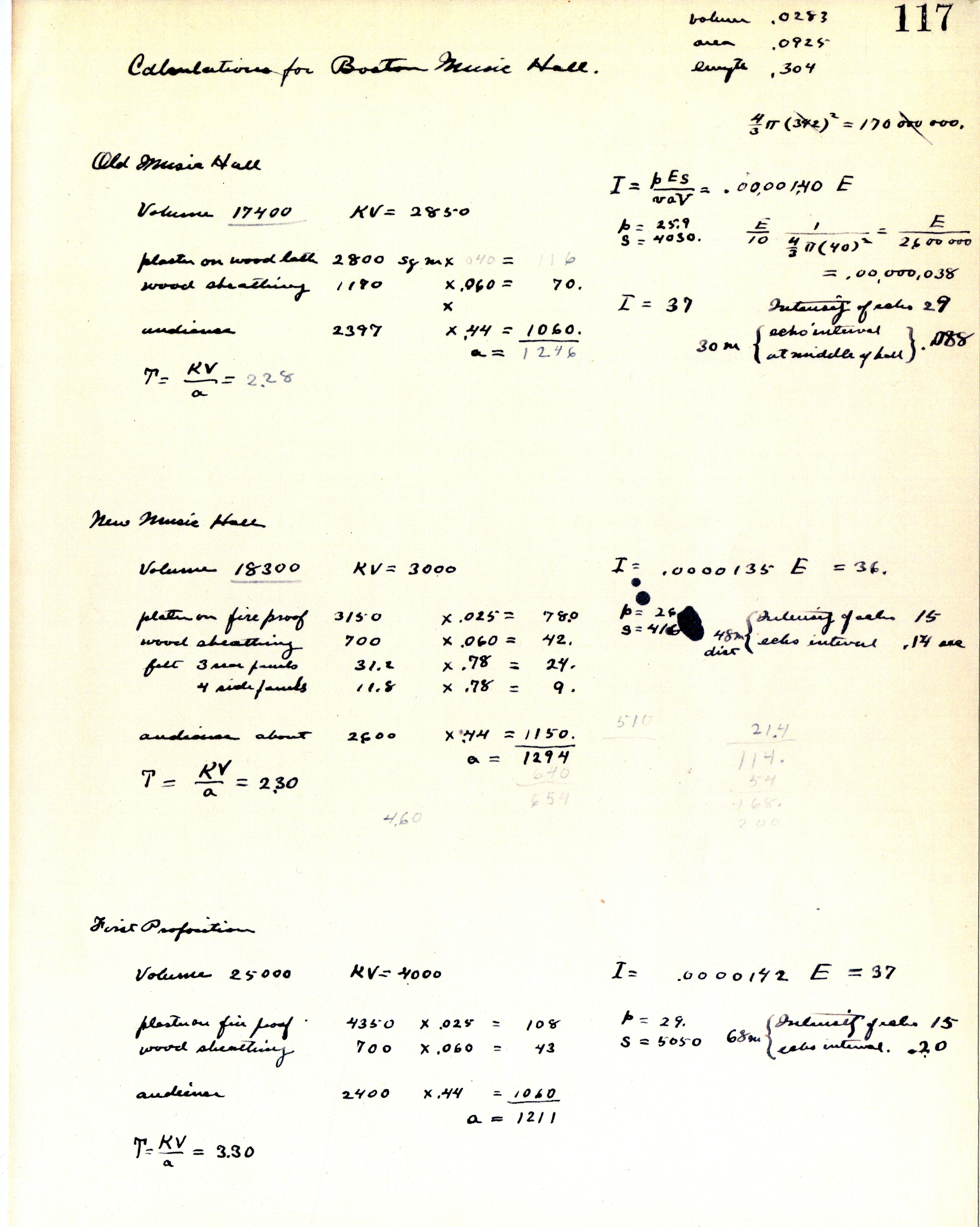
Facsimile of a page from Wallace Clement Sabine’s Notebook No. 7: Research from 1896-1899.
The notebook provides the entire basis for the 1898 and 1900 papers titled “Architectural Acoustics” and ends with the calculations for the Leipzig Gewandhaus, the Boston Music Hall, and the projected new music hall. This page shows the formula that Sabine developed to calculate reverberation time.
Courtesy of the Harvard University Archives.
Under Construction

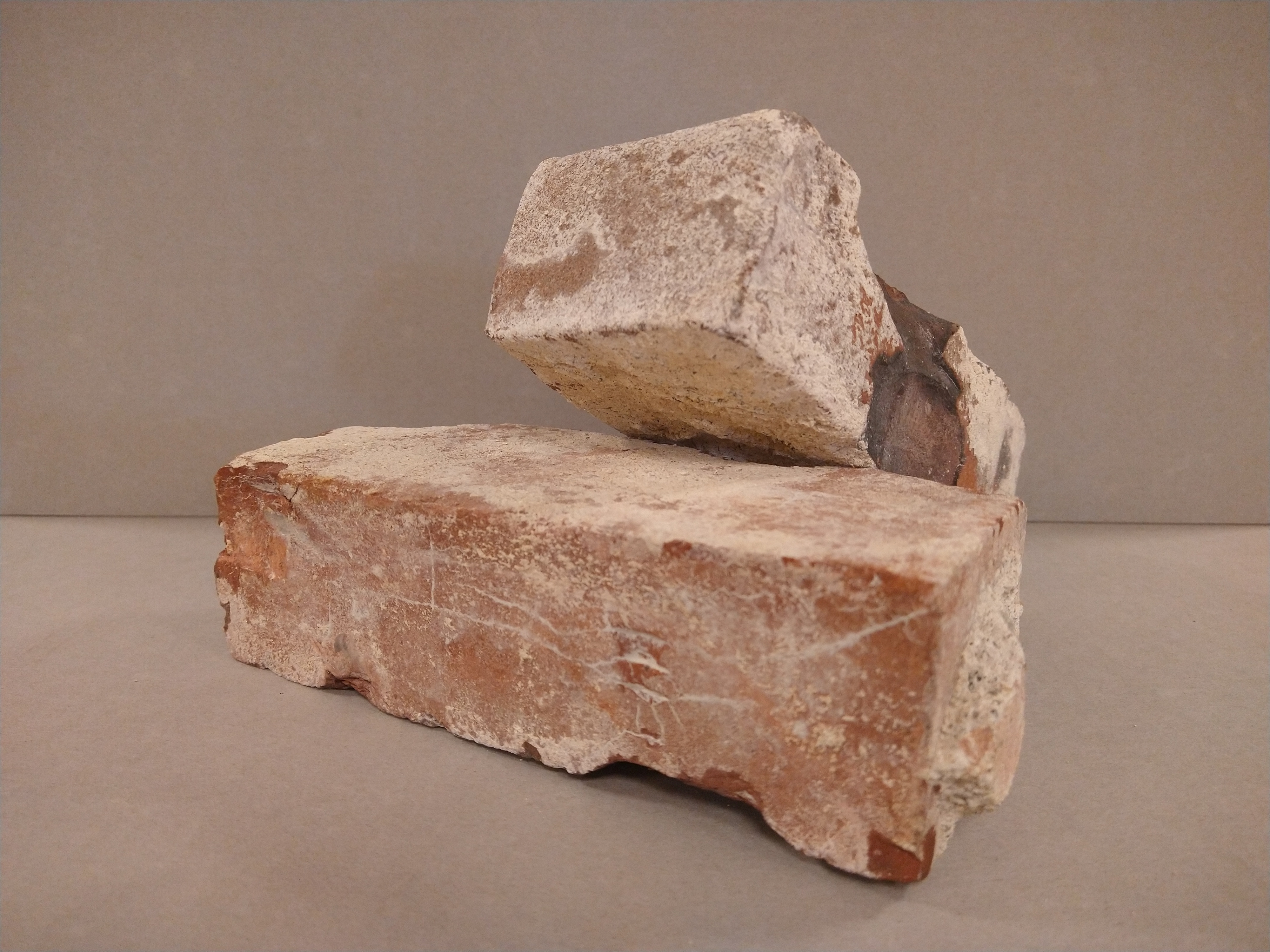
Symphony Hall bricks.
With exception of wooden floors laid directly on masonry and steel, the hall is constructed entirely of brick, tile, steel, and plaster, making it virtually fireproof.
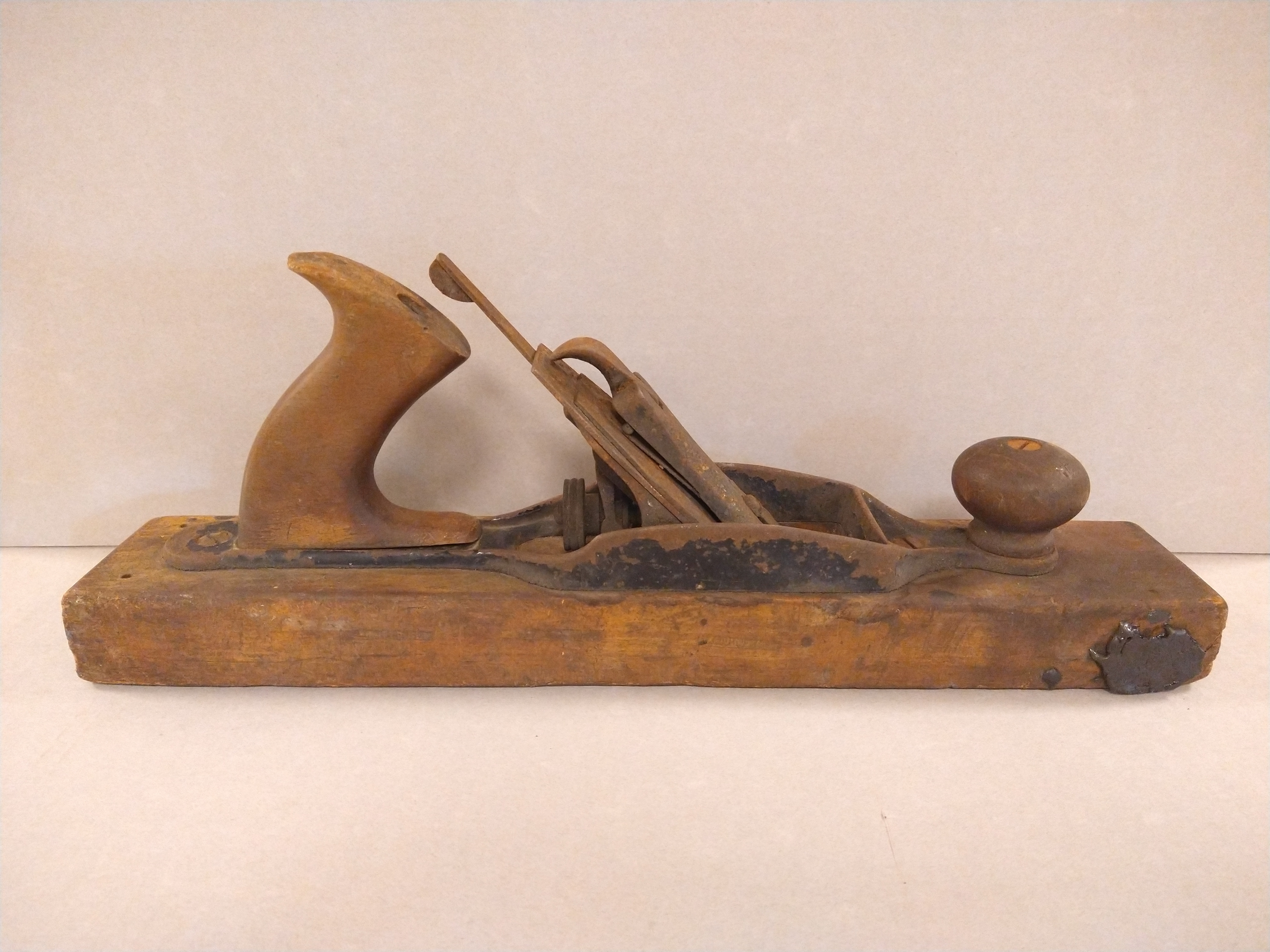
Carpenter’s plane used in the construction of Symphony Hall.
This tool was found in a section of the Symphony Hall roof on the Massachusetts Avenue side when the roof was being replaced in the Fall of 2011.
A Completed Building

Reactions to the New Hall
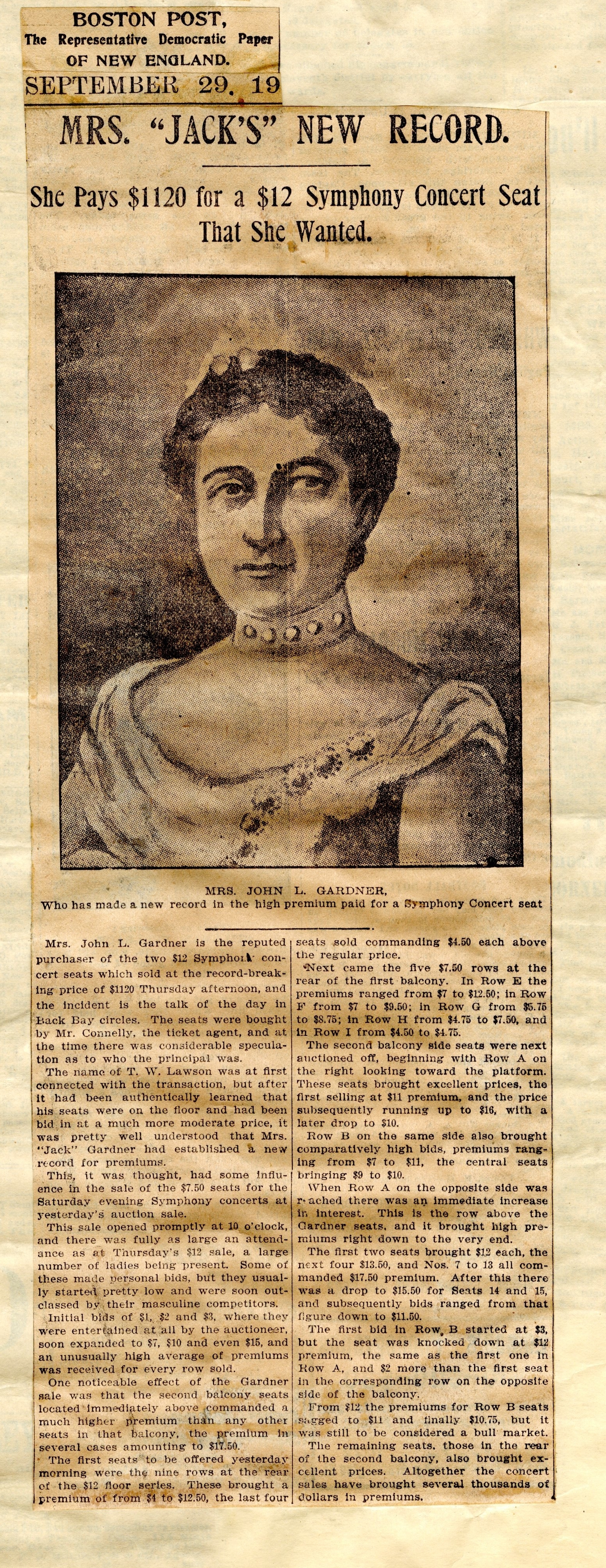
Boston Post article recounting how much Isabella Stewart Gardner spent at auction for a BSO subscription seat.
Before the new Hall had even opened its doors, Ms. Gardner paid the highest premium—$1,120— for a pair of $12 seats to attend the season’s 24 BSO concerts. Great anticipation over the new Hall caused most seat prices to rise that season.
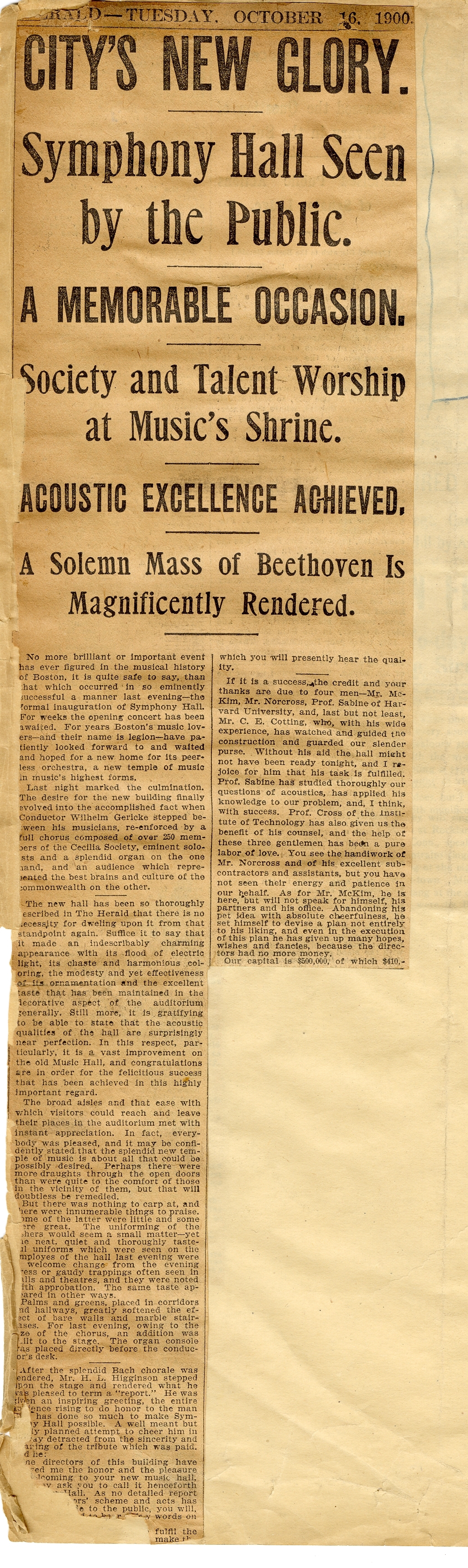
Herald review of the opening concert in the new Symphony Hall on October 15, 1900.
The writer was quite satisfied with the Hall, including the acoustics for which the Hall is still known today.
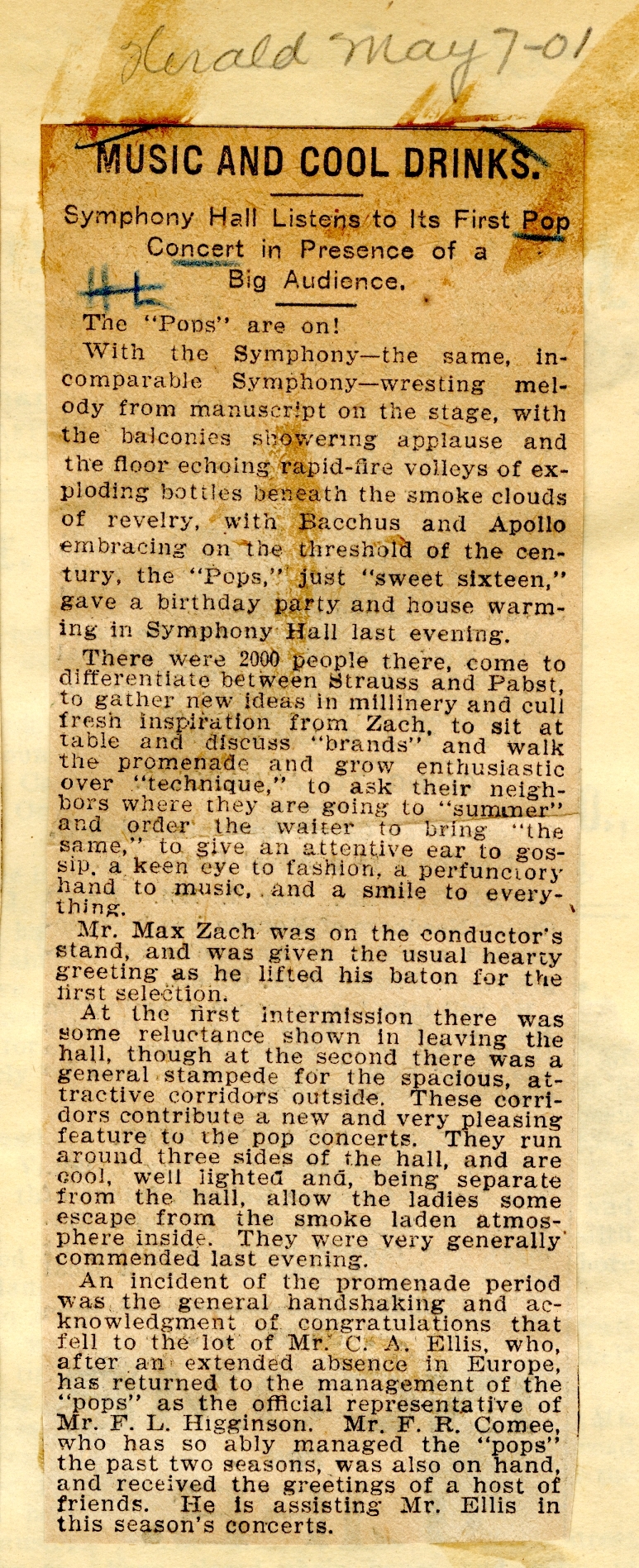
Herald review of the first Pops concert in the new Symphony Hall, May 7, 1901.
Multiple writers noted how the architecture of the new Hall enhanced the Pops experience, particularly the wide and well-lit corridors flanking the auditorium.
To learn more...
